

Why the Objects You Keep Make a House Feel Like Home
AUGUST 2026
In almost every home I design, there is an object that does not quite belong.
A ceramic bowl a mother made. A framed photograph that has followed someone through four addresses. A wooden box that holds nothing in particular. It sits slightly apart from everything around it, and its owner knows this. They will often gesture toward it and say something like, I know this doesn't really go, before I have said a word.
I have learned to pay close attention to that object. Because the thing that does not match is almost always the thing the room cannot do without.
There is a body of work in environmental psychology on what is called place attachment, the emotional bond that forms between people and the places they inhabit. It is the reason leaving a home can feel like grief, and the reason a house you have lived in for a decade feels different from an identical one next door.
One of the studies I return to most often is now more than forty years old. Csikszentmihalyi and Rochberg-Halton interviewed families in Chicago about the objects in their homes, asking which ones they valued most and why. What they found was that the objects people named as meaningful were almost never the expensive ones. They were the ones that carried a relationship, a memory, or a version of themselves they wanted to keep hold of. Value came from association, not from cost or craft or beauty.
The finding has held. Four decades later, Coleman and Wiles interviewed older adults in New Zealand about the possessions they kept at home, asking them to photograph the objects and write about them. One woman in her eighties described a chair she had bought for twenty pounds and a hall table for thirty dollars, explaining that she had very little money and had to find gems among junk, so everything has a little story. People turned to these objects to stay connected to who they had been, and to steady themselves through change. They were not decoration. They were doing something.
Both findings have stayed with me because it inverts how most interior design is practiced. We are trained to curate. To edit. To make sure everything relates. And in doing so, we routinely remove exactly the things that made a house belong to someone.
My research at the University of Wisconsin-Madison taught me that memory is not passive. A room is not a neutral container that events happen inside of. The room participates. Some spaces give your memory something to attach to, and others give it nothing, and the difference is not about how beautiful the room is.
Objects work the same way, only more powerfully, because they carry their own history in. A room can be designed to be memorable. An object arrives already remembering.
This is why a home stripped of personal objects and styled entirely from a showroom can photograph beautifully and still feel like a hotel. Nothing in it is holding anything. There is no anchor for the mind to catch on.
I know this from my own house.
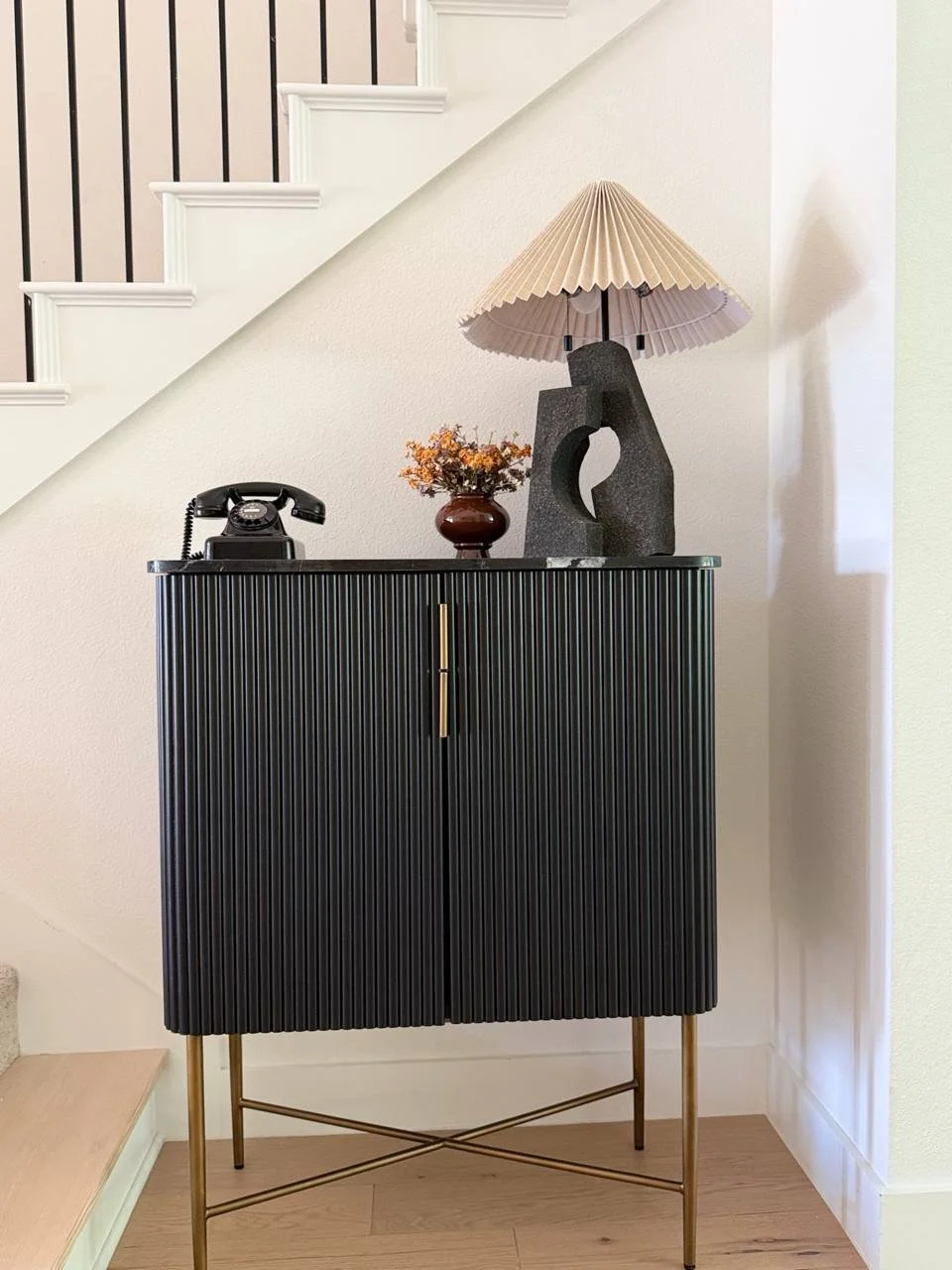
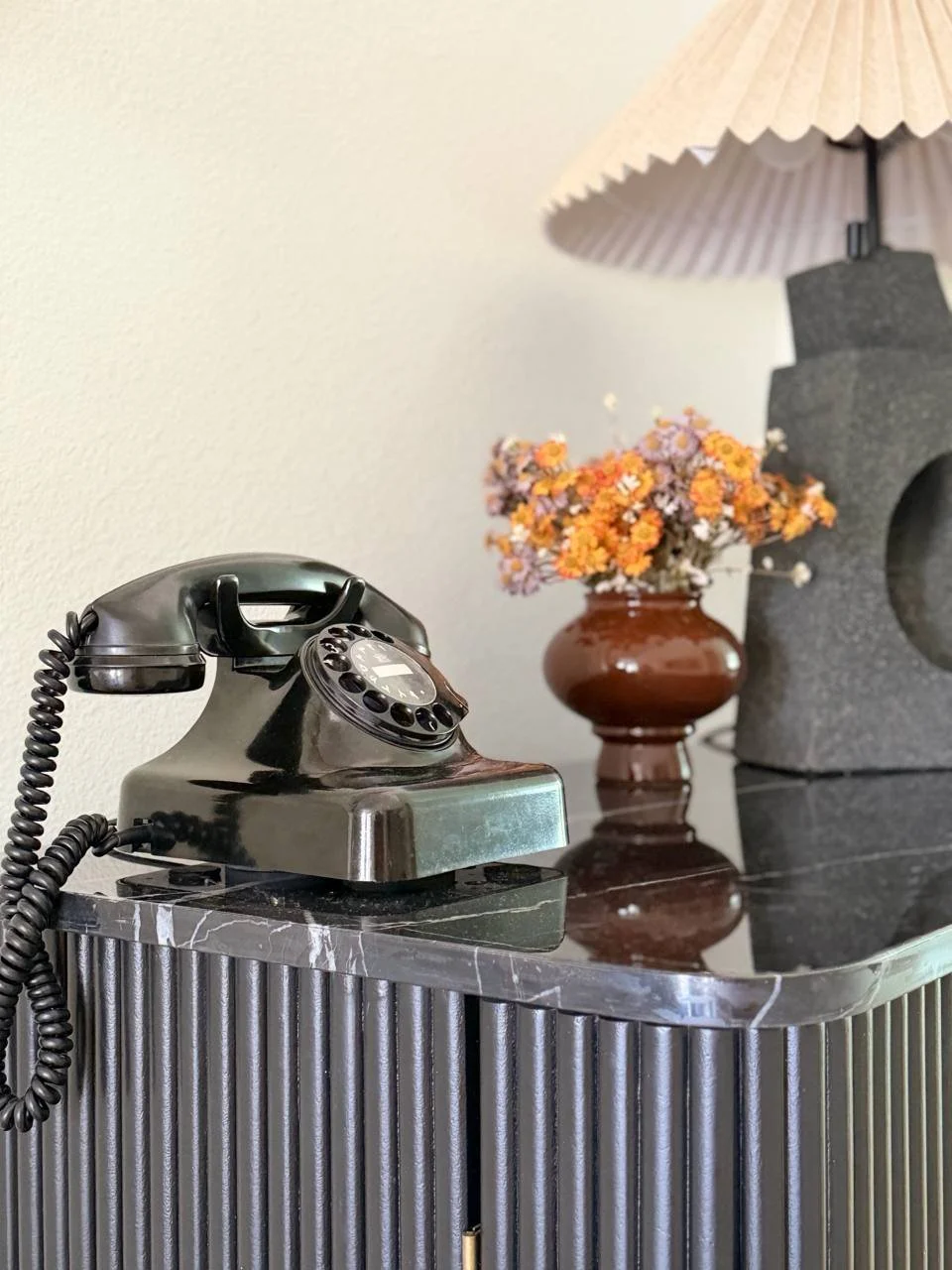
On the marble top of a cabinet by my stairs, there is a black rotary telephone that belonged to my grandparents. It does not connect to anything. It has followed me across a continent, and it will never make a call again, and I would not trade it for the most beautiful object in any showroom I have ever specified from.
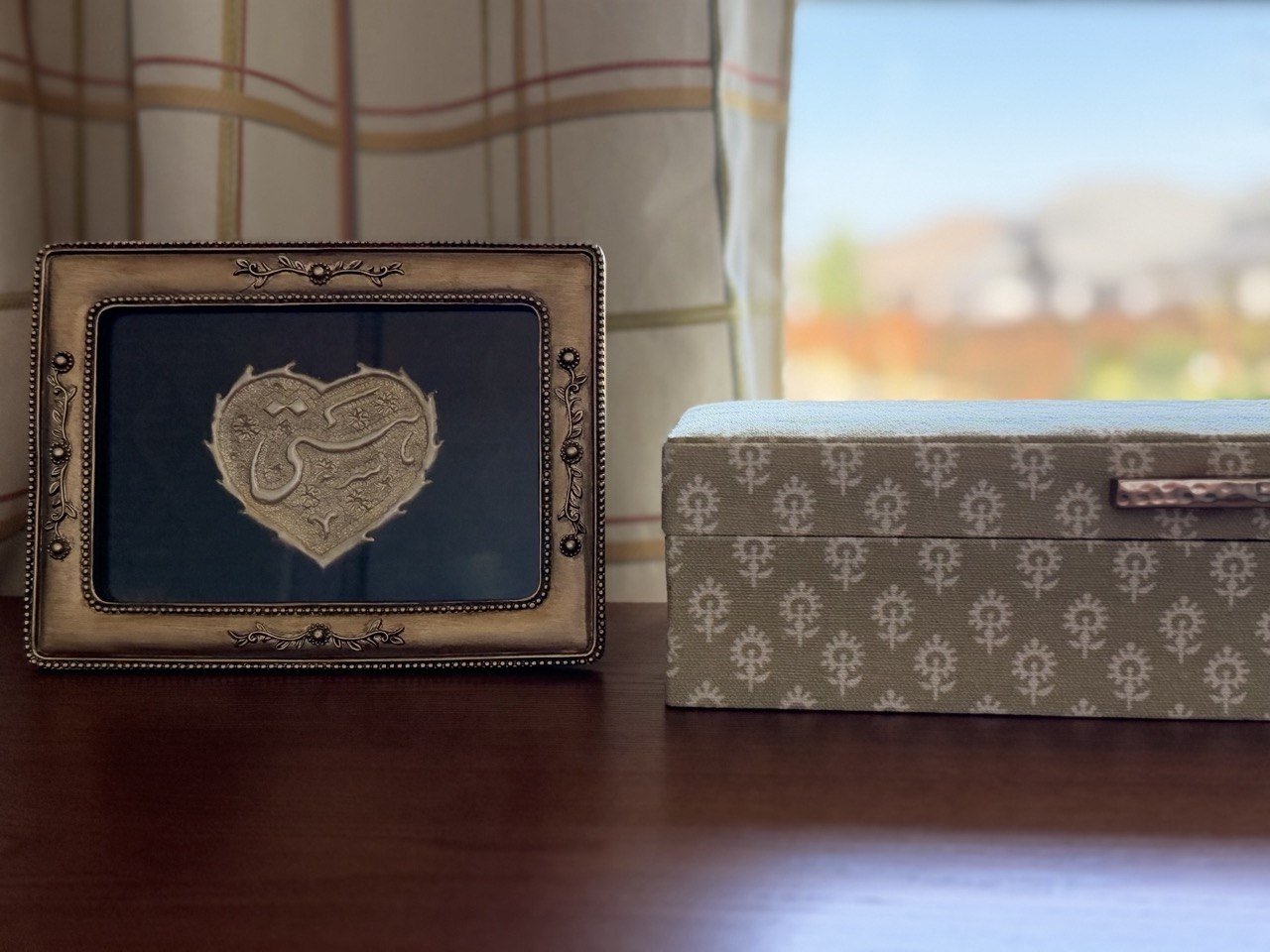
In another room, on a dark wood surface near a window, there is a small framed piece with my name on it, in Farsi. It was made by hand in Esfahan when I was eleven. My name was not common, and I had grown used to never finding it on anything that came ready-made. Then, in a shop in Esfahan, there it was, my name, made by someone's hands. I remember the specific happiness of that afternoon better than I remember most of that year.
The two do not live in the same room, and both, as it happens, sit easily in the rooms they are in. But the order of that matters. Neither one earned its place by matching. They were here first, and the rooms were arranged around them. Had they clashed, they would still be here, and I would have found another way to make the room work. Their meaning has nothing to do with whether they match, and everything to do with what they carry.
I now ask about objects early, before anything is measured or specified. Not what do you want the room to look like, but what is in this house that you would take with you if you moved tomorrow.
The answers are rarely what people expect to say out loud. A chipped mug. A rug that does not match. A stack of their father's books they have never read and will never give away. Once someone has told you that, you cannot design the room the same way. The design has to make room for it.
Sometimes that means building something specific to hold an object properly, a niche, a shelf at the right height, a wall left quieter than it might otherwise be. Sometimes it means choosing a palette that lets an inherited piece sit comfortably rather than looking like a mistake. And sometimes it simply means telling a client that the bowl stays, and watching their shoulders drop.
The word we reach for when a house works is usually calm, or warm, or welcoming. But I think what we are describing is closer to recognition. A home that feels like yours is one that reflects something back at you.
That cannot be specified. I cannot order it, and no amount of good detailing will produce it on its own. What I can do is design a space that has room for it. That is the part of this work I take most seriously, and it is why my process begins with listening rather than with drawings.
A house becomes a home the way a friendship becomes old. Slowly, through accumulation, and mostly through the things you did not think to throw away.
If there is an object in your home you have been quietly apologizing for, I would like to hear about it.
This reflection is part of the SoulSpace Journal, a space for design thinking shaped by research and lived experience.
Research referenced: Csikszentmihalyi and Rochberg-Halton, The Meaning of Things (1981); Coleman and Wiles, The Gerontologist (2020).