

Why Your Kitchen Is the Emotional Center of Your Home
March 2026
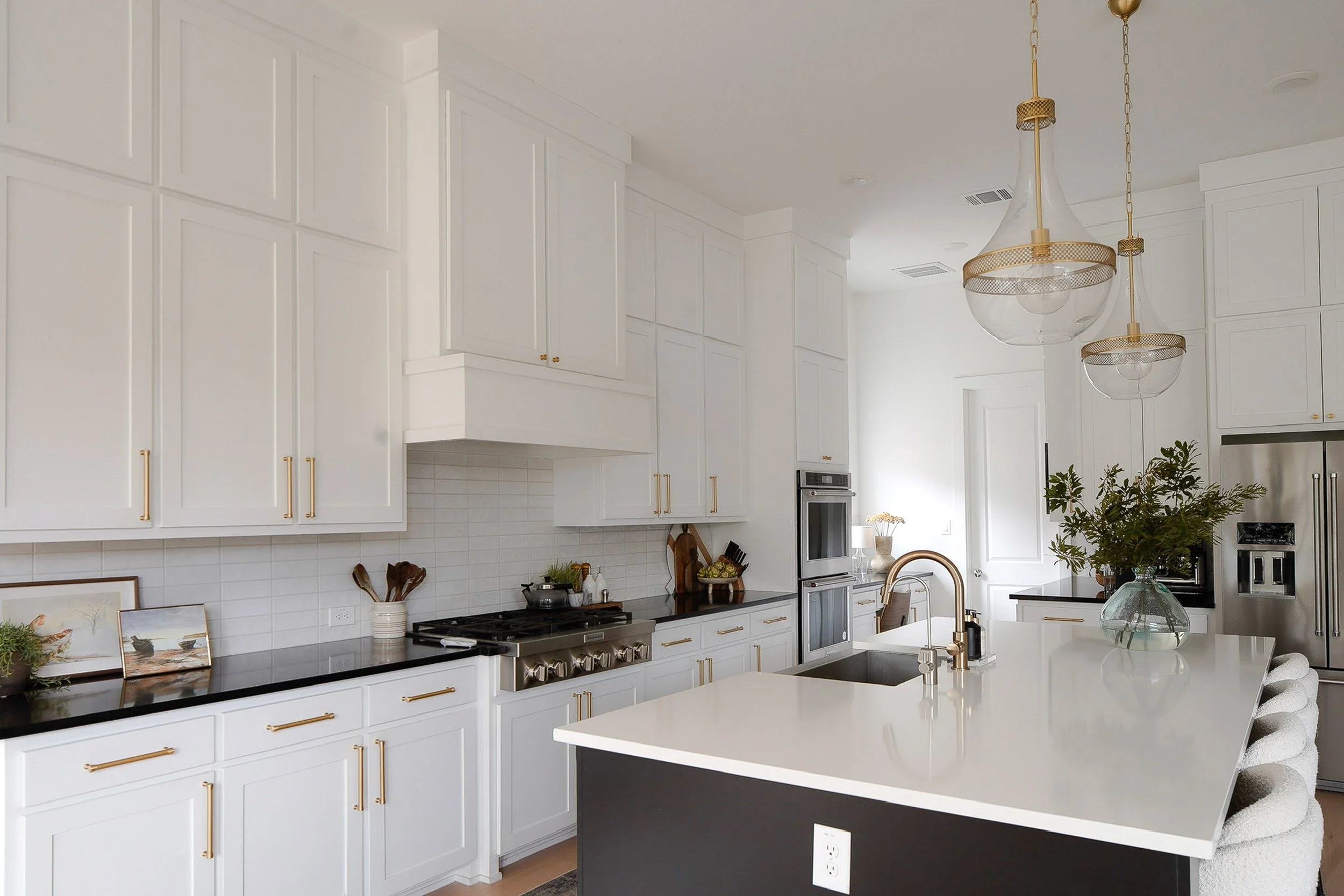
The kitchen has always been more than a place to prepare food. It is where families gather without being invited, where conversations happen naturally, and where the rhythm of daily life finds its center. From a design perspective, this is not accidental.
Research in environmental psychology suggests that kitchens function as emotional anchors within a home. Their central placement, the sensory richness of cooking, the warmth of gathered light, and the physical act of nourishing others all contribute to a feeling of safety and connection. When a kitchen is designed well, it does not just work efficiently. It draws people in.
This idea of emotional anchoring connects to something central to my doctoral research at UW-Madison. I studied how the formal qualities of interior spaces, their geometry, their visual composition, and the character of their architectural elements affect recognition memory, feelings of pleasantness, and visual attention. What the data showed, consistently, was that the spaces people remembered most were the ones that evoked genuine emotional responses. Memorability was not driven by visual complexity or novelty. It was mediated by pleasantness. The spaces that felt good were the ones that stayed with people.
A kitchen, more than perhaps any other room, has the potential to be that kind of space, if it is designed with emotional intent rather than just functional logic.
This is why I approach kitchen design differently. Before selecting a countertop material or choosing cabinetry hardware, I ask: how does this family want to feel in this room? Do they want a space that encourages their children to sit and do homework while dinner is being made? A space that feels open enough for entertaining but intimate enough for a quiet morning coffee? The answers to these questions shape everything, from island dimensions to lighting temperature to where the seating is placed.
My research also showed that biomorphic forms, curves, and organic shapes inspired by nature hold visual attention longer and are perceived as more pleasant than rigid rectilinear forms. In a kitchen, this translates to subtle but meaningful choices: the soft radius on an island’s edge, the gentle arc of a pendant light, the organic texture of a handmade tile. These are not decorative flourishes. They are design decisions rooted in how the human perceptual system actually processes space.
Material choices matter here more than in almost any other room. A kitchen is touched constantly; the surfaces are felt under your hands dozens of times a day. Stone that feels cool and grounding, wood that warms under your palm, hardware that has weight and intention: these tactile moments accumulate into an emotional experience that no amount of visual styling can replicate.
When I designed our own family kitchen, I returned to these principles repeatedly. The curved forms, the natural materials, the spatial flow between cooking, gathering, and sitting; all of it was guided by the question I ask at the start of every project: how do we want to feel here? The result is a room that feels as good at 6 AM with one cup of coffee as it does at 7 PM with a full table. That consistency of feeling is what I mean by emotionally intelligent design, and it starts long before a single finish is selected.
This reflection is part of the SoulSpace Journal, a space for design thinking shaped by research and lived experience.