

Why Curves Matter: What My Research Revealed About How We Remember Spaces
April 2026
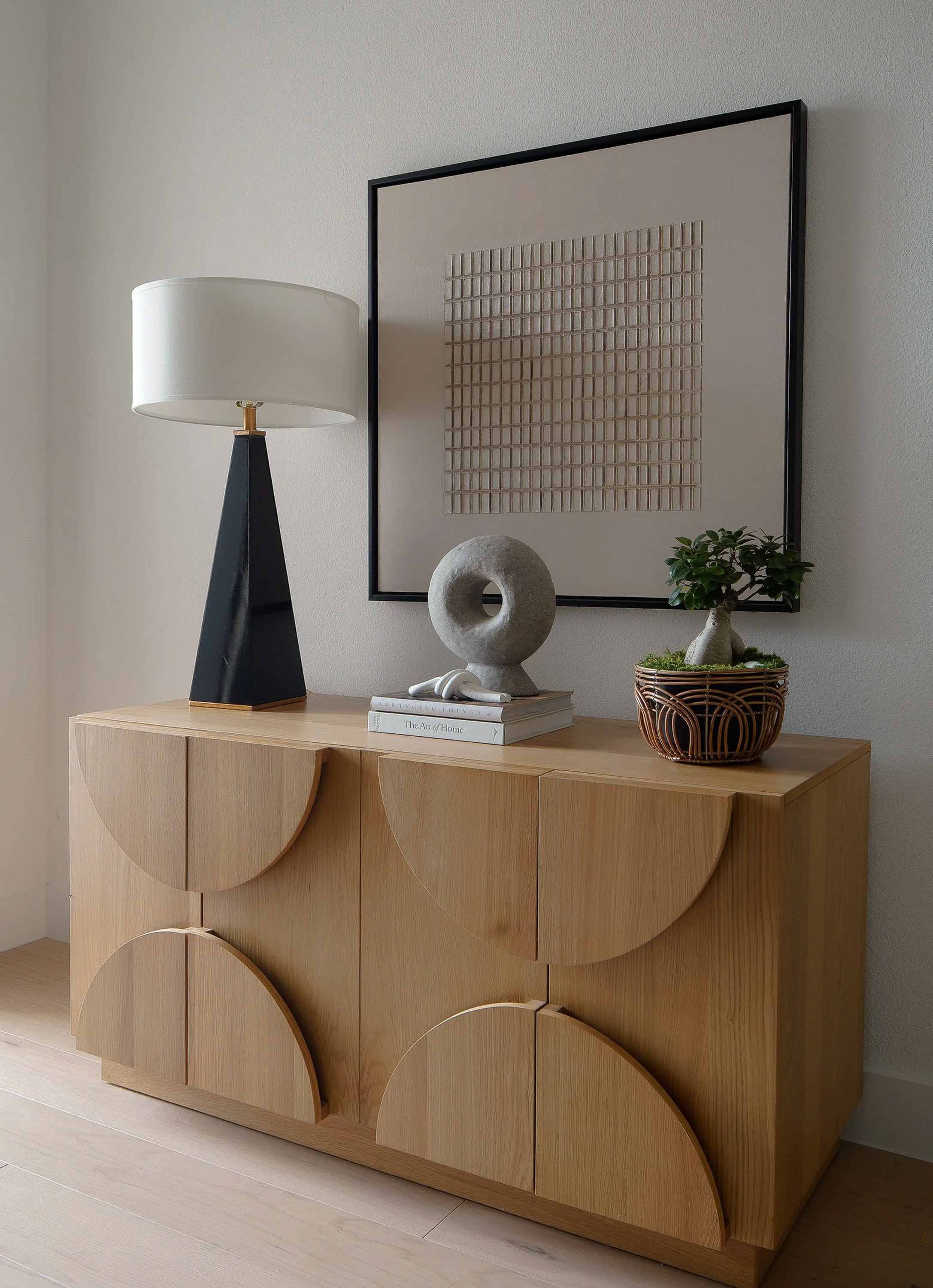
Some spaces stay with us long after we leave them. Others, no matter how polished, fade from memory almost immediately. For years, I wondered what made the difference. During my PhD at the University of Wisconsin-Madison, I set out to find the answer.
My research compared two approaches to interior architecture: biomorphic design, which draws on organic, nature-inspired forms, and rectilinear minimalist design, defined by straight lines, boxes, and the absence of ornament. I wanted to know whether the geometry of a space could measurably affect how well we remember it, how pleasant we find it, and where our eyes are drawn.
The experiment was carefully designed. Working with colleagues in psychology, mathematics, and design, we created standardized sets of interior photographs, controlling for variables like novelty, complexity, and the number of design elements so that geometry was the true variable being tested. Sixty-eight participants viewed the images while eye-tracking technology recorded exactly where they looked and for how long. After a distraction period, they were tested on which spaces they remembered.
The results were clear. Spaces with biomorphic elements were remembered significantly better. They were rated as more pleasant. Participants spent more focused visual attention on the organic forms within those spaces. Perhaps most interesting was the mediation finding: the reason biomorphic spaces were more memorable appeared to be connected to the pleasantness they evoked. In other words, these spaces felt better, and because they felt better, they stuck in memory.
This research, published in the Journal of Interior Design, changed how I think about every design decision. When I introduce a curved edge on a kitchen island, or choose a table with organic lines, or specify a light fixture with flowing form, I’m not making a stylistic choice. I’m making a cognitive one. I’m designing a space that your mind is more likely to hold onto.
At SoulSpace, this is what I mean by emotionally intelligent design. It’s not intuition dressed up in language. It’s research translated into rooms where you actually live.
Mirkia, H., Nelson, M.S.C., Abercrombie, H.C., Thorleifsdottir, K., Assadi, A., & Sangari, A. (2022). Recognition Memory for Interior Spaces With Biomorphic or Non-Biomorphic Interior Architectural Elements. Journal of Interior Design, 47(3), 47–66.