

Designing Rooms That Grow With Your Children
January 2026
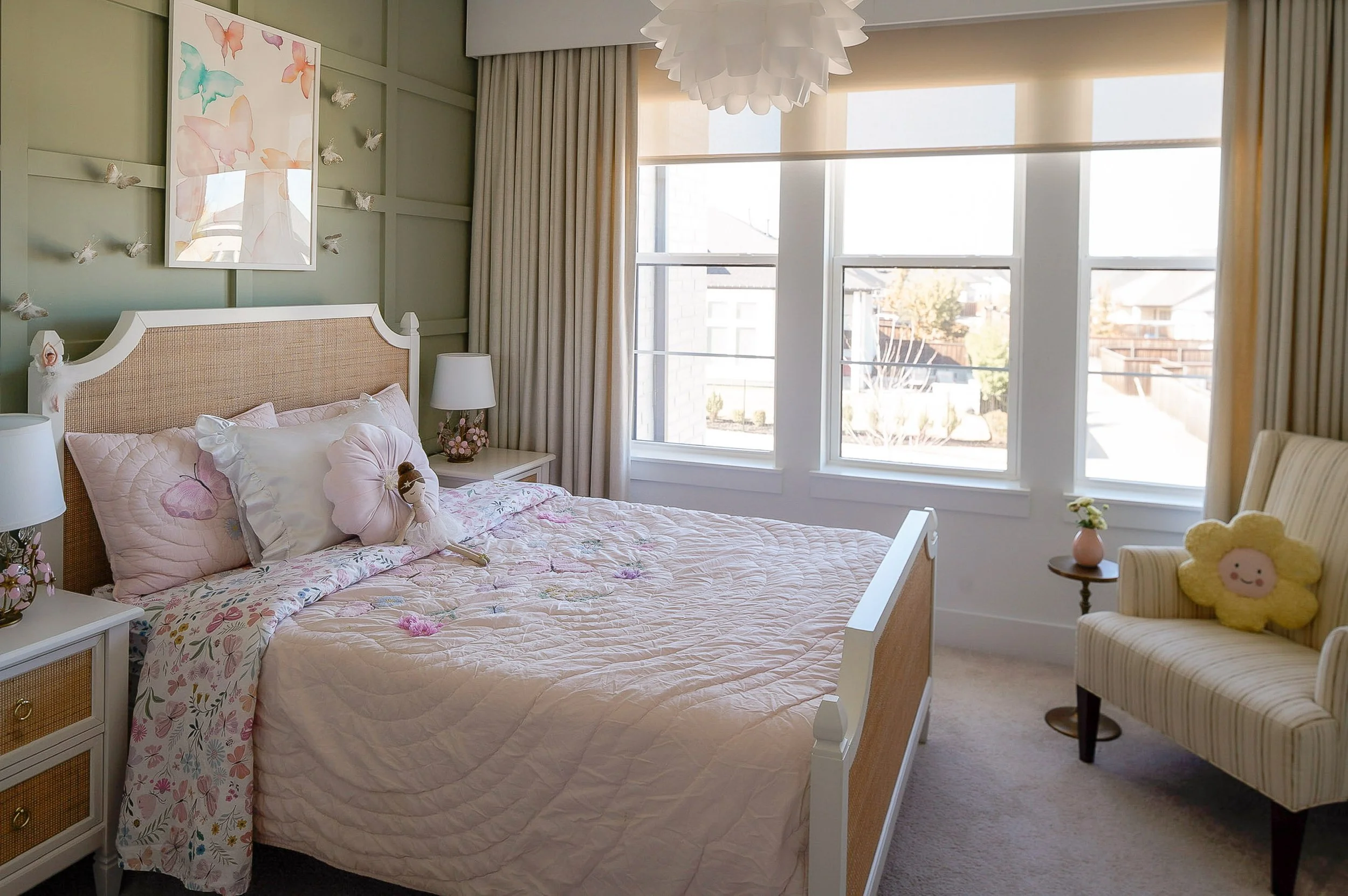
A Room for Gentle Becoming
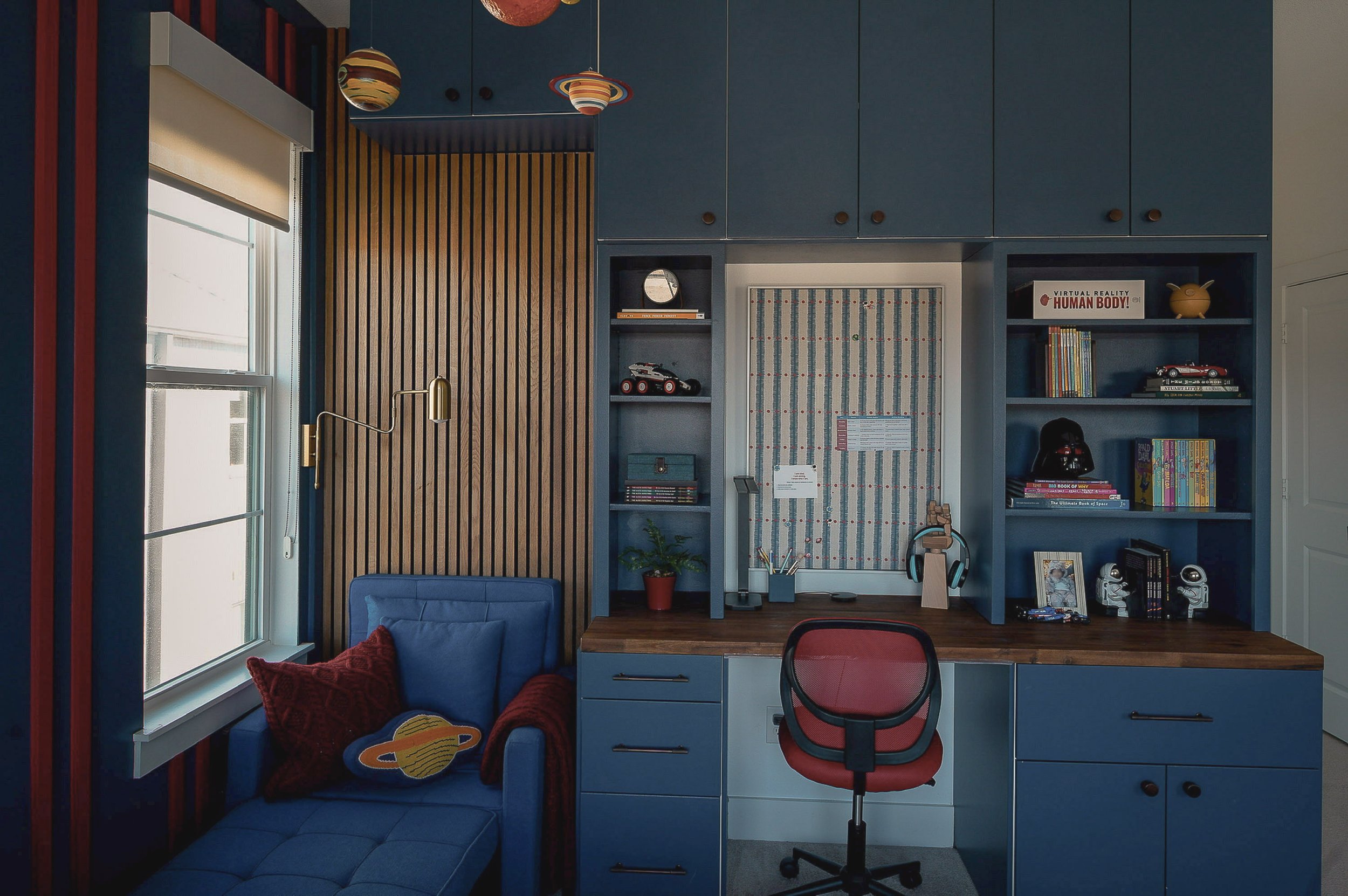
A Space for Bold Curiosity
One of the most common questions I hear from parents is some version of: " How do I design a beautiful room for my child that won’t need to be completely redone in three years?
It is a fair question, and the standard industry answer: choose “timeless” furniture and neutral palettes, misses the point entirely. Children’s rooms are not miniature adult rooms. They are active, evolving environments that need to support imagination, emotional regulation, rest, and play, sometimes within the same hour.
The answer is not to fight that reality. It is to design for it.
During my doctoral research at the University of Wisconsin-Madison, I studied how the form and geometry of interior spaces affect memory, emotion, and visual attention. One of the broader insights from that work, and from the environmental psychology literature it drew upon, is how powerfully spatial qualities like form, scale, color, and composition influence our emotional responses to a room. This holds true for adults, but it holds even more true for children, whose nervous systems are still developing and who are especially sensitive to the sensory character of their surroundings.
A space that is entirely designed from an adult aesthetic perspective can feel beautiful to the parent but disorienting to the child. The proportions feel wrong, the surfaces feel precious, and the message, however unintentional, is: this room is not really yours.
My research also showed that biomorphic elements, organic, nature-inspired forms, evoke stronger feelings of pleasantness and hold visual attention longer than rigid, rectilinear forms. This finding influenced how I thought about my own children’s rooms. Soft curves, layered textures, and organic shapes are not just stylistic preferences. They create an environment that a child’s perceptual system reads as safe, engaging, and worth exploring.
When I designed my daughter’s room, I wanted it to feel like a soft place to land. Gentle textures, layered warmth, muted tones, and room for her own art and objects to occupy the walls as she grows. The organic forms in the furniture and textiles are there by intention; they quietly support her sense of ease in the space.
My son’s room required the opposite energy: bold color, defined zones for different activities, materials that could absorb the intensity of a nearly eight-year-old’s day. But the same principle applied. The forms are dynamic rather than rigid. The design needed to feel exciting enough to match his spirit but structured enough to support focus and calm when he needs it.
In both cases, the framework is the same. Design the bones to last: quality furniture, considered layout, good light. Then leave deliberate space for the room to evolve with the child. A bookshelf that holds picture books today will hold chapter books tomorrow. A wall that displays finger paintings now might hold watercolors in a few years. The room grows because it was designed to.
This is not a timeless design in the conventional sense. It is living design, and it might be the most meaningful work I do.
This reflection is part of the SoulSpace Journal, a space for design thinking shaped by research and lived experience.